Mark Haver: Founder of BlueGreen Generation Consultancy, Remote Professional & Former Digital Nomad
- remote work
- ocean sustainability
Discover the journey of Mark Haver, founder of BlueGreen Generation, who combined remote work, ocean advocacy, and purpose-led travel for almost four years.
Quick answer
How did Mark Haver mix ocean advocacy with digital nomad life?
Mark Haver, founder of BlueGreen Generation, spent three years and nine months as a digital nomad, running his ocean, climate and sustainable fashion consultancy from the Americas, Europe and Africa after leaving Washington DC for Barcelona in August 2022. His proudest win: a jellyfish umbrella protest of about 150 people in Canada, followed within a week by a national moratorium on deep-sea mining.
- Mark founded BlueGreen Generation after graduating in May 2020, straight into the COVID job market.
- The fashion industry causes 35% of microplastics entering the ocean and over 10% of global carbon emissions, which is why he joined the Global Fashion Exchange.
- He ended his nomad chapter in May 2026 and is now fundraising for ocean and climate campaigns from the US.
- His four favourite destinations: South Africa for nature, Mexico for culture, Peru for adventure, and Egypt's Red Sea for marine life.
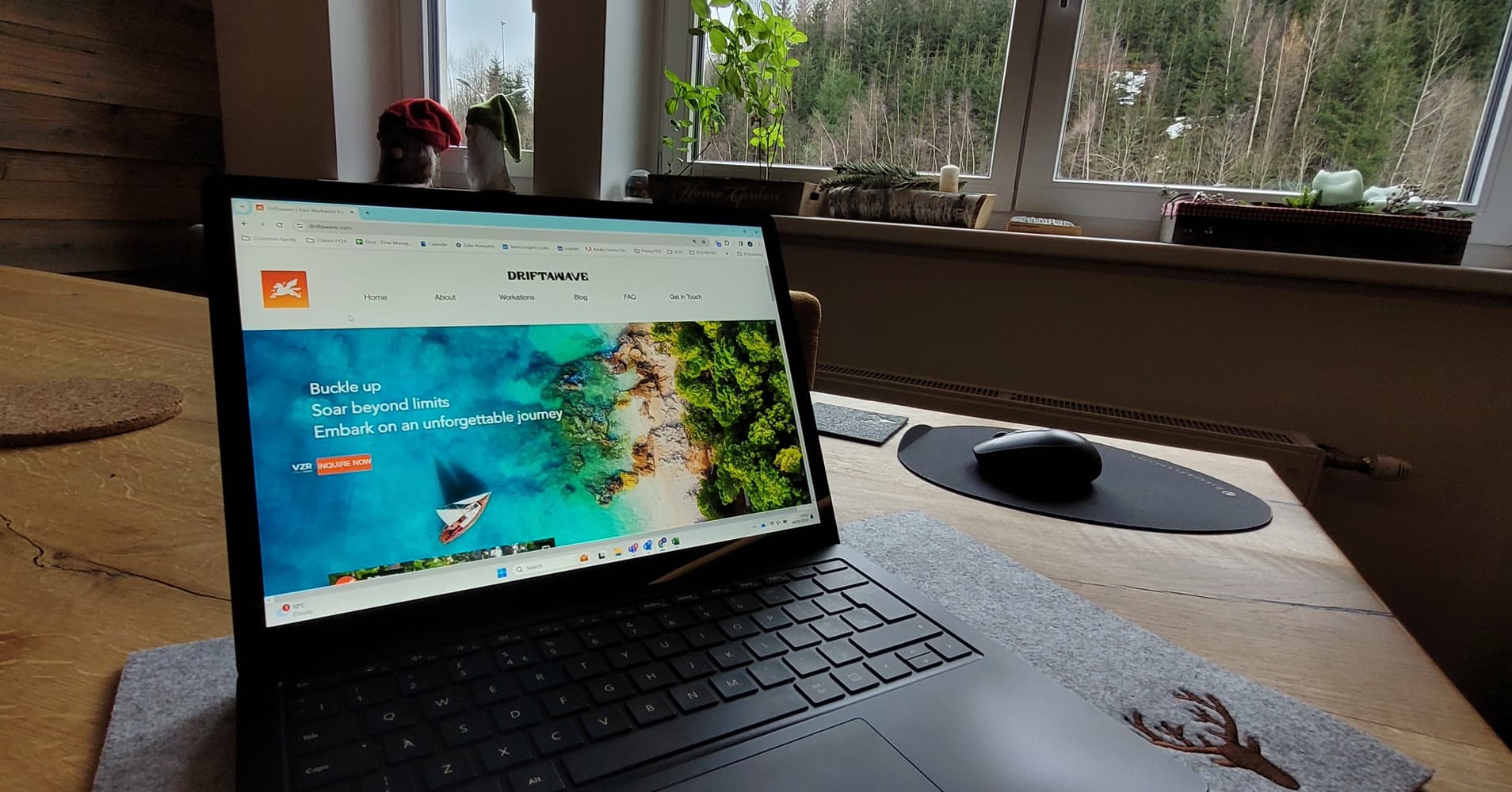
- He joined a Driftawave workation in Croatia to explore the group's connection to the ocean on the Adriatic.
Since our workation in Croatia, we’ve caught up with Mark Haver, our one and only ocean warrior. At the time of our Croatia trip, Mark was taking advantage of the remote nature of his consulting projects and traveling across the Americas, Europe, and Africa. Working with clients and partners from all over the world to advance projects for action on ocean, climate, and sustainable fashion, Mark works remotely, combining travel adventures with events and public speaking engagements, where he leads youth-centered campaigns for a better future for people and planet.
You are consulting clients to achieve climate, ocean, and sustainable fashion action. Could you tell us a bit more about yourself and your journey?
I graduated in May 2020, so it was an interesting, and difficult, time to navigate leaving education and entering the workforce with COVID-19 in full swing. I am deeply inspired by the young people and projects that they are running for our planet, so I wanted to leverage my skills like a Swiss army knife combining passions. So, I created my consultancy firm to create action for ocean, climate and sustainable fashion. Whether it is by providing support for policy advocacy, strategic partnerships, or digital mobilization, I will work with you to redefine what a “blue-green” future looks like for current and future generations.
What is the biggest achievement of change that you have enabled?
My proudest accomplishment was in Canada last year for the International Marine Protected Area Congress where we brought a bunch of umbrellas decorated like jellyfish and gathered a crowd of about 150 people in the middle of February to fight deep-sea mining. Less than a week later, the Canadian government announced a moratorium on deep-sea mining in national waters. A few months later, they announced their support for a moratorium on deep-sea mining internationally as well.
Many people care about planet preservation, yet when you ask people to stand up for the ocean this crowd becomes smaller, so this was huge.
Fun fact: of every 2 breaths you take, 1 is produced by the ocean.
Besides marine life protection you work with the Global Fashion Exchange, which has made a tremendous impact on sustainability in the fashion industry.
Besides my passion for the ocean I grew up with a passion for fashion, and actually, the fashion industry is extremely connected to marine health: The fashion industry is responsible for 35% of all microplastics entering the world’s ocean. Every time you wash synthetic clothing like polyester, nylon, or fleece, the textiles can shed up to 700,000 microfibers, passing through wastewater treatment to pollute our ocean. Not only is it a primary plastic polluter, but the fashion industry produces more than 10% of the global carbon emissions. So, it was a no-brainer to join the initiatives of the Global Fashion Exchange and to use fashion as a medium to inspire people to think about responsible consumption and production.
The fashion industry is very creative, they have started coming up with innovations such as leather made from mushrooms. When I joined the Global Fashion Summit in Copenhagen, there was a wallet made out of agave, which is used to make tequila. There is so much innovation in materials, sustainability, circularity, and simply reduction, which makes it an exciting industry to work and learn from.
I saw you recently ended your time as a digital nomad in May 2026. What’s next for you?
After a long and glorious three years and nine months, I decided it was time for me to stop living out of my suitcase and plant deeper roots. Following invigorating conferences in Mexico and Colombia, I moved back to the U.S., enjoying time in my hometown between Baltimore and Washington DC, where I grew up. I have been working with new clients since the start of 2026, and I am currently fundraising for an international ocean-climate campaign and the U.S. campaign against seabed mining. Later this year, I hope to move to New York City. However, I still have some exciting engagements on the horizon. I will be going to New Orleans in August, and I hope to be at the UN Climate Conference in Turkiye in November.
I feel like no matter where you are, it is incredible to discover and discuss our connection to nature, which helps us to feel connected to each other and to the earth.
How did you become a digital nomad?
Before going remote, I lived in Washington DC. DC was an expensive city to live in, where I was juggling multiple jobs, paying expensive rent, and being annoyed constantly by how much groceries cost. However, everything became remote during COVID. After leaving an incredible consulting firm for the ocean and the environment, ESP Advisors, I continued working with Sustainable Ocean Alliance and was meeting new clients online. I have always had a lifelong passion for travel. When I realized I could work doing what I loved while being fully online, I knew that the world had become my oyster. In August 2022, I left Washington DC for Barcelona, and I have not looked back.
What was your experience like working remote and travelling continuously?
In the famous words of Dua Lipa, “I’m not always on holiday. I just make everything I do feel like a holiday.” This has been the mantra of my last four years. Picture this: you’re on your way to work on your laptop in a cafe. Every step you take is a new sensory experience in a town, in a country, you had imagined but now see with your own eyes. When work ends, you know there are new travelers in the hostel looking for a new friend and eager to seize the day. And when it’s the weekend, you choose your adventure. What will you do? Find ancient Mayan ruins in the jungle? Visit a world-class art museum with the masterpiece you’ve only read about? Tan on the beach and swim with sea turtles?
I have been living my dream life, and I am so thankful for the freedom and flexibility that remote work has offered me. I have memories I will never forget, and I am a more educated, compassionate, and grateful person because of it.
It is such an incredible experience being able to share the joy and challenges of traveling with fellow travelers. Travelling really reminds you of the kindness and generosity people have to share no matter where they are from.
How did that change you as a person?
When you are travelling you learn a lot about yourself. You decide your schedule, you decide your limits, you decide what makes you uncomfortable, you learn new languages.
You push yourself to make introductions to random strangers that could end up being one of your best friends. You begin to understand when you want to take moments for yourself and enjoy quality time just being solo. It is a really cool way to get in touch with yourself and how you like to express yourself.
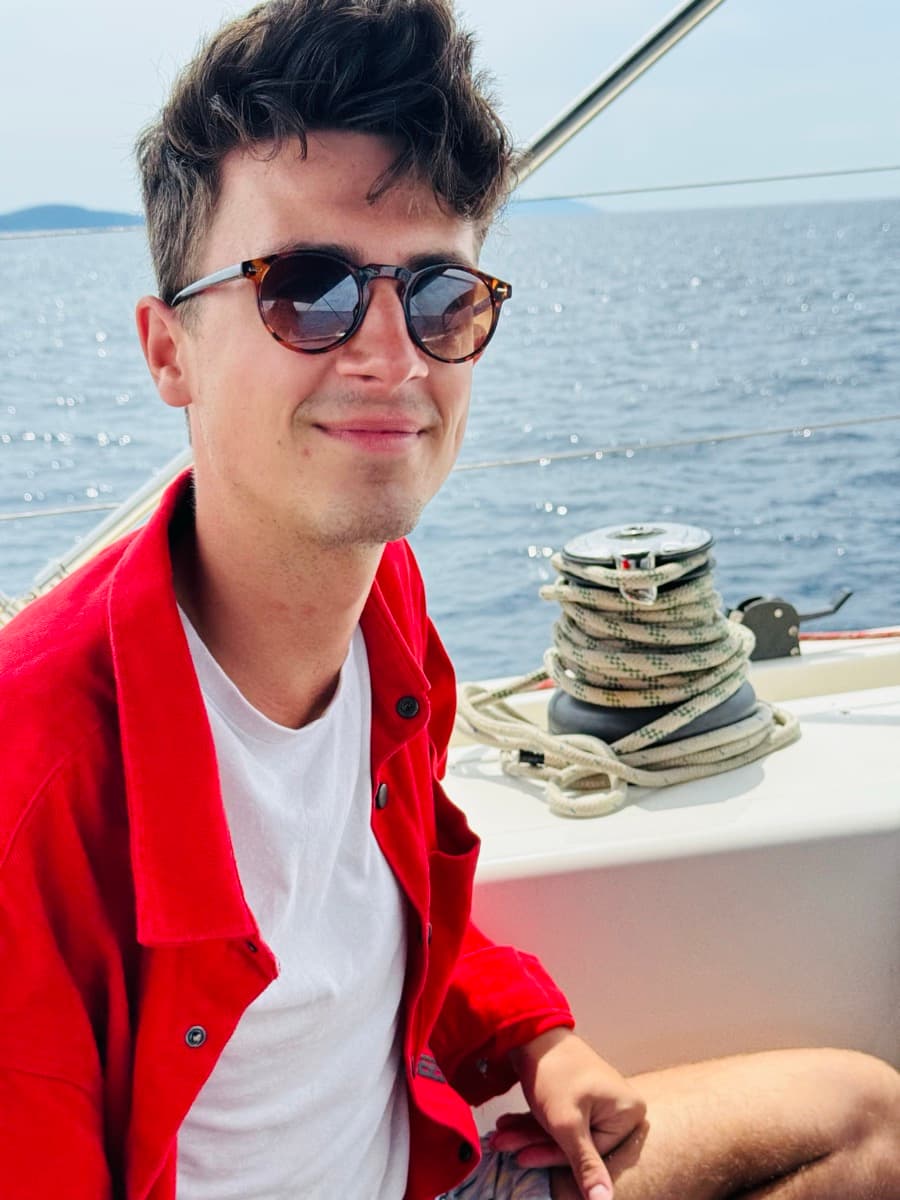
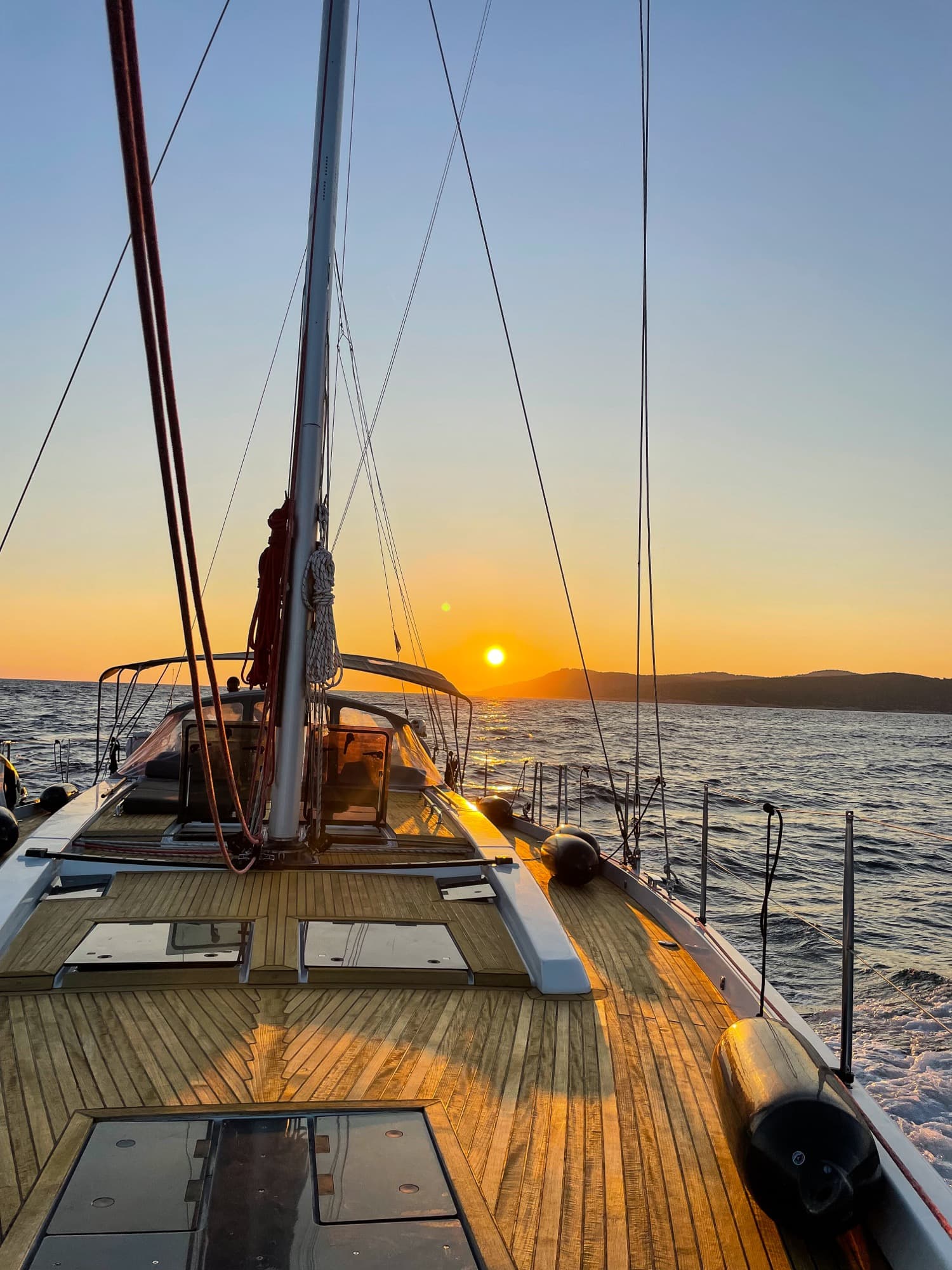
Mark soaking in beautiful ocean views, enjoying the ride and vibes on the Adriatic Sea in Croatia.
What have been challenges you ran into being a nomad?
Logistics are the toughest part. Where do you want to be and when? As a digital nomad, you need a place that has strong Wi-Fi connectivity. You want to go to a cafe to work or get some food? You should be somewhere central. You scroll the reviews to get hints of Wi-Fi strength and location.
But how do you get there? When does the bus leave? Is it delayed? Are you running late? There are many things out of your control, and you have to adapt.
That’s why Driftawave is such a great concept. A community of digital nomads means you all need the same basic needs, and Gina helps provide that for you. Driftawave takes so much of that logistic stress away while giving you great activities and a community you know you can connect to!
What are your 4 favorite destinations?
Nature. South Africa. Obviously you have Kruger National Park and the safari, Cape Town is such a special city. You can go surfing, you can climb a mountain, you can go skiing, and visit the vineyards, all in the same day. There are so many different types of natural activities, and it is so biologically and ecologically diverse from other parts of the world. There is a whole kingdom of plants that is unique to that Cape Town area. The diversity of experiences is profoundly exciting. On the west side of South Africa, you find penguins and sharks. On the east side, you find vibrant corals and stingrays bigger than your dinner table.
Culture. Mexico is an incredible country for so many reasons. The vibes are immaculate. There is so much natural beauty to explore, and the Mexican people are so warm and welcoming, always with a smile and a laugh. Mexico is such a huge country as well that it has become a major melting pot of different local cultures. It is incredible to learn more about their different traditions, alongside the incredible artisanship they bring. Especially in Chiapas where the indigenous culture is so strong. Seeing all of that blending in with the modern day is truly fascinating.
Culture tip: if you are planning to visit the Frida Kahlo museum in Mexico City, make sure to book it more than a month in advance.
Adventure. It has to be Peru. It is a very well known tourist destination for many reasons and very well known for its food, probably the best in Latin America. Machu Picchu is one of the most recognizable landmarks in the world, but for good reasons. There are so many hikes that are just as breathtaking as Machu Picchu, all over Peru. You can go to a desert oasis, Huacachina, and go sand-boarding in the desert. You can hike to one of the deepest canyons in the world. You can go to the Amazon. You can go diving. There is so much to explore. So much of it is extreme in a sense and it really tickles your curiosity when it comes to the adventurous spirit.
Marine life. There was one place that really blew me away: the Red Sea off the coast of Egypt, off Hurghada. It was just incredible to see the color, the health, the resilience of the ecosystem. It was truly a stunning, imaginative, colorful, healthy place to go diving in the world. I will never forget it.
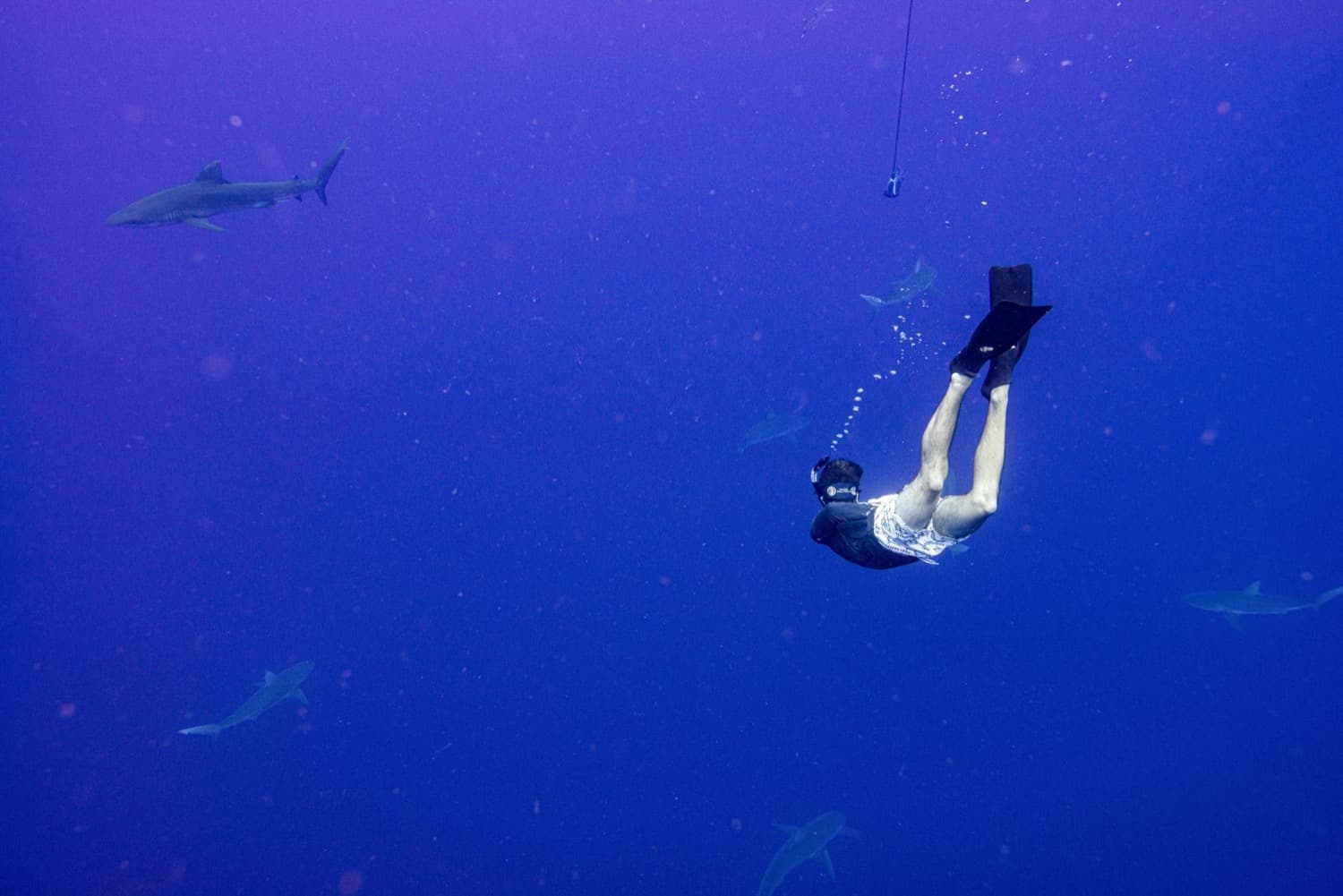
Overall I have been blessed to go diving in some spectacular locations, from French Polynesia to freshwater springs in Florida to the eastern coast of South Africa where I learned how to dive.
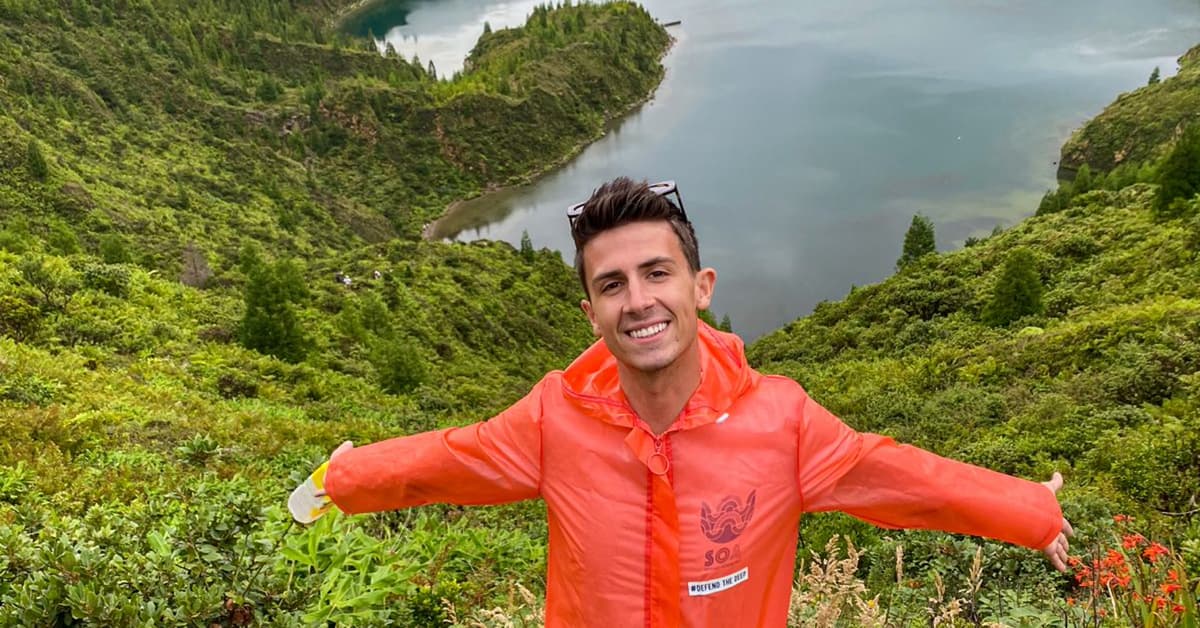
For Mark, time in nature, whether deep in the ocean or high above a crater lake, is a chance to reconnect with himself and the planet.
Which tools have been beneficial to you and up-leveled your productivity, so you could enjoy all those adventures even more?
One of those tools is definitely Happy Cow. If you are not someone who eats meat, this is a great way to crowdsource what are some of the best restaurants that are friendly for a vegetarian diet during your travels.
Polar Steps is another great app to quickly find the photos geotagged on a map of the incredible locations you have visited. It reminds you of the beautiful memories and exciting experiences. So I recommend that app too.
We noticed you participated in a critical language scholarship in Indonesia.
Yes, oh my gosh, that was an experience. When I attended college I was always interested in travel, but I was also always interested in language. The US State Department has this scholarship for students who are looking to learn languages and cultures that are important to American interests in the economy, conflict, and culture. But these are not common languages like French or Spanish. These are languages like Urdu, Hindi, Swahili, Korean, Japanese, and Indonesian.
Indonesian was one of the languages that did not require any language learning before the actual intensive summer program. In other classes like Arabic and Chinese, you need to have studied for one or two years in order to achieve this level of proficiency. Indonesia sounded really interesting because I do not know where I would get Indonesian proficiency classes in Central Florida where I went to school. Indonesia has so much to offer that I thought being immersed in Indonesian culture and learning about the opportunities for me to use this language to support conservation and other ecological initiatives in Indonesia was really interesting.
So for 10 weeks I was in Malang, East Java, Indonesia, learning how to speak Indonesian. I lived with an incredible host family and was supported by incredible local language tutors, Mas Ishom and Mas Razul. The experience is about putting your English in the back of your brain and completely adopting Bahasa Indonesia whenever and wherever you can. It taught me so much about how to learn new languages and to let go of the fear of embarrassing yourself when learning.
I might have sounded like an idiot the first two weeks, but those first two weeks of babbling helped me get better and better instead of being too ashamed to try and learn slower. So I really appreciate that experience. I think it definitely has encouraged me to dive into language learning, whether it is Spanish when traveling around Hispano America or Brazilian Portuguese when traveling in Brazil. It is a really cool way to connect with people and learn new things. You are there with the language, the family and the culture.
Could you tell us a bit about the challenges on the Adriatic Sea?
There are many different ocean issues like:
- Plastic pollution
- Overfishing
- Climate change, wreaking havoc on so many different natural ecosystems
That is why I got so excited to join Driftawave in Croatia to discuss this topic whilst exploring the attendees’ connection to the planet, and what makes them feel tied to the ocean. I think there is so much power in feeling connected with our natural environment because it is a source of joy, wonder, and beauty.
Being able to tap into the connection with nature is something that is very sustaining. By doing so, it allows the members to take the knowledge and experience they built during the experience, and apply it to how they engage with their relationship with the environment after the workation.
The ocean does not have borders. The problems that we need to solve collectively are not what one country can solve by itself.
Want to join a Driftawave workation and connect with changemakers like Mark?
Driftawave creates intimate workation experiences where remote professionals build real connections, just like the boat experience Mark joined in Croatia. Schedule a call with us here or reach out via info@driftawave.com.
Brought to you by