Remote Renaissance: Insights & Inspiration for Remote Workers from Alex Hernandez, Co-founder of Jobgether
- remote work
- talent

Remote work insights from Alexandre Hernandez, co-founder of Jobgether: strategies for trust, async communication, and thriving in the remote renaissance.
Quick answer
How did Alex Hernandez build Jobgether fully remote?
Alexandre Hernandez co-founded Jobgether in March 2020 with Juan, a partner he had never met in person, after two Zoom calls during full lockdown. Built remote from day one, the company now runs one of the largest remote job search engines, with around 200,000 remote job postings, an AI matching tool, a 24 hour message rule, and offsites two to three times a year.
- Alex quit his Paris headhunting job in February 2020, a week before lockdown, then met co-founder Juan through the French Founders network.
- Jobgether's team spans India, Madagascar, Israel, Sweden, Portugal, Spain, Belgium, Colombia and Venezuela, held together by async communication.
- Internal rule: every message gets answered within 24 hours, and Discord voice channels recreate walk-up office chats.
- Check output, not input: Alex rejects employee monitoring, even though he cites that around 80% of US companies use monitoring tools.
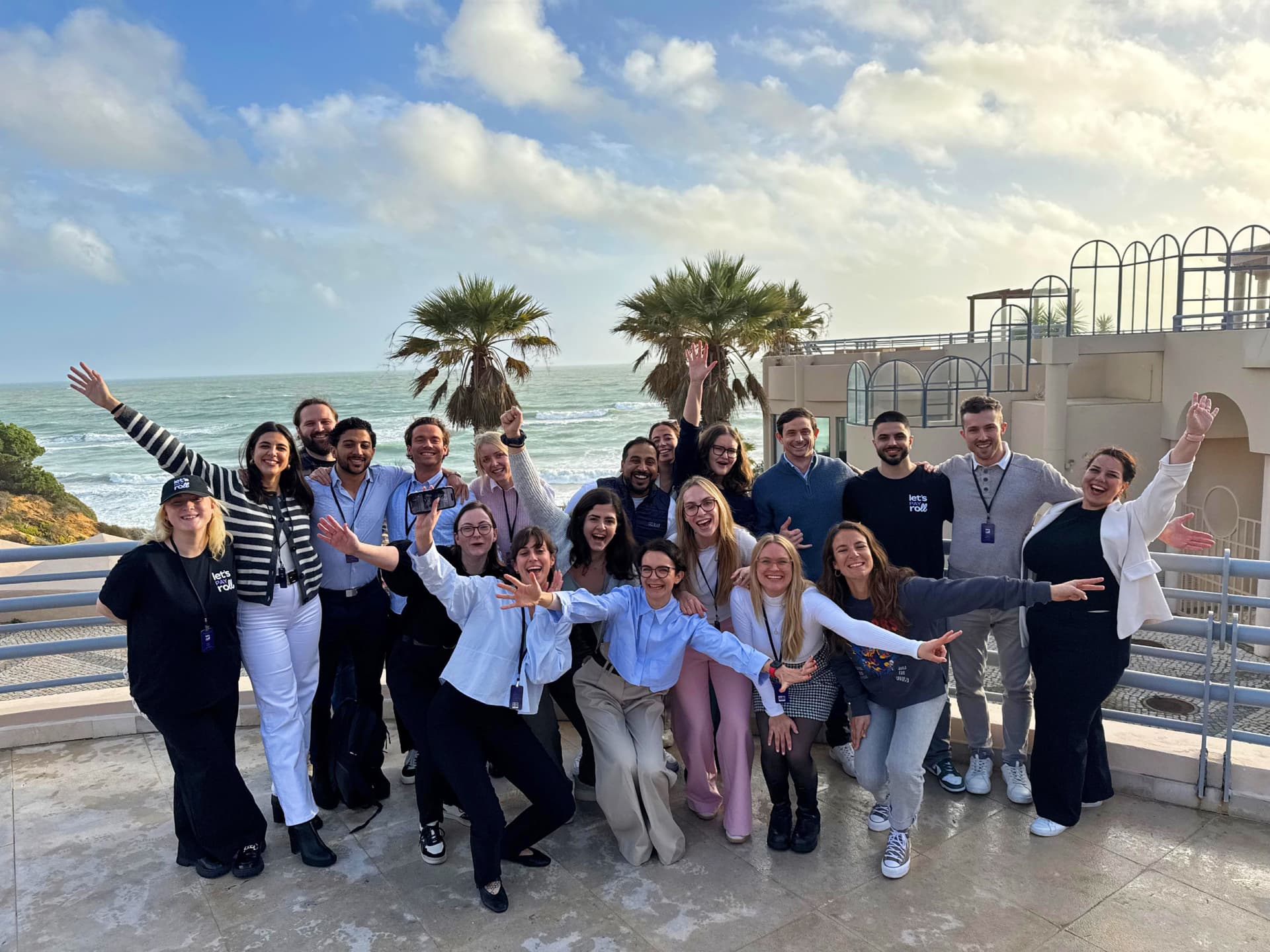
- The team gathers in person at company offsites two to three times a year, usually per region, with budget allocated for fun.
Remote work is not a passing trend, it is a fundamental shift in how companies hire and operate. Alexandre Hernandez, co-founder of Jobgether, left traditional office life in 2020 to build a fully remote startup with a partner he had never met. Here are his insights on trust, async communication, and thriving as a remote worker.
In the ever-evolving world of work, Alexandre Hernandez has boldly navigated from traditional office life to the freedom of remote entrepreneurship. Leaving behind a secure job, he embarked on a bold entrepreneurial journey with a partner he had never met in person, while embracing the challenges of a global pandemic.
Today, Alex is the co-founder of Jobgether, a pioneering platform dedicated to remote-first companies. His story is not just about adapting to change but thriving in it. In this insightful interview, Alex shares his experiences and perspectives on remote work, offering practical tips and demystifying common myths. Join us as we travel into Alex’s remarkable journey and gain a deeper understanding of what it truly means to work remotely and work smart.
Alex, what made you start your own business?
Back in February 2020, I was working as an employee for a traditional head hunting company, an English company. I was living in Paris, which I didn’t like, and I was bored of my job.
Despite earning a really good salary and having a good team and everything good on paper, I had enough.
So I decided to quit in February 2020. I had the idea of setting up my own company, but I didn’t want to do it alone. I knew I wanted to be an entrepreneur and I wanted more freedom. So I quit, and a week later lockdown hit. I should have maybe kept my job, but it was too late because I was about to move to Spain.
Madrid is a really active community. I joined a club called French Founders. It is dedicated to C-level, and connects you to other people in the club. I had a few calls with people in Madrid, and one day they told me: we have someone called Juan, he is based in Brussels, he is part of French Founders in Brussels, and he wants to talk to you.
We connected, and Juan explained to me that he had just quit his job. He was a financial director for a big company, and he had an idea and a vision for starting a startup in human resources.
But he didn’t want to be alone, he didn’t know how to sell, and he had zero knowledge of the recruitment market. So he was looking for a co-founder and someone to start a project with him.
We clicked straightaway and we shared a similar vision, that most people are not happy at work.
This is due to many reasons: bad management, poor salary, and more. Yet these people usually stay because they don’t know how to find a job that suits their needs, staying in places where they spend 60, 70, or 80% of their time with people they don’t like or at a company they don’t agree with. It was clear we shared the same vision.
How did you come up with the idea of having a fully remote startup?
We didn’t know where the world was going in March 2020. I was locked down in Paris. Juan was locked down in Brussels. We just had two Zoom calls. Despite my family and friends telling me to get a permanent job quickly, I decided to start this project with Juan in March 2020, dedicated to our mission and vision in times of uncertainty.
That is how we started the company. I didn’t know Juan. I didn’t meet Juan, but I thought it would be fun, and I still work with him today. So, of course, we had to start a company built for remote. It was full lockdown, with no prediction of when it would be over.
After a few months, we started to hire people in Colombia and Venezuela. All remote, obviously. It was working for us and we could access a much larger talent pool, because we were not looking for people based in Paris or Madrid. We were free in a way that remote made easier.
We were just looking for the right person, wherever that person lived. We didn’t mind if that person was living in Ukraine, India, Lisbon, Sweden, or Chicago.
What mattered to us was having the right person for the project. That is how we started the company. Today, after pivoting two years in, I am glad that we now have one of the largest job search engines dedicated to remote work. We are now becoming not just a job search engine, but a global remote talent platform.
Can you name some challenges in setting up your own remote business?
First of all, it is changing, but still probably 90% or 95% of the people you will hire have never worked fully remote before. They want to work remote, but have never worked fully remote.
Having a fully remote company means there are things that you do differently. I am not saying one is better than the other, but being fully remote is, in my opinion, the way forward. You need to trust your people.
Everything I am going to say technically would apply to any company, on site or remote, but even more so for remote: you need to trust your employees. When you work remote, I don’t think you can or should tell people to do things like monitoring employees. Even though apparently in the US something like 80% of companies use monitoring tools to see when workers are actually working, which I think is really wrong. You should check the output, not the input. You shouldn’t check what time they start working, whether they take an hour break or a 30 minute break, whether they go to the gym at lunchtime, how many phone calls they make, or how much time they work.
You should only check what they do, what they actually deliver, and if what they deliver matches what you want them to do.
- You need to trust your people.
- You can’t just walk to someone’s desk and say, hey, can you do this for me or can you check this?
- You simply can’t. So communication is a really important aspect of a remote company, especially asynchronous communication. When you are a remote company, you might not have everyone in the same country or the same time zone.
Do you have any strategy to be efficient with your remote team?
For example, at Jobgether we have colleagues from India, Madagascar, Israel, Sweden, Portugal, Spain, Belgium, Colombia, and Venezuela, all working in different time zones. So when it is 4:00 pm in India, it is probably five in the morning in Colombia. If our talent in India needs to collaborate with the person in Colombia, they rarely match working hours. That is where asynchronous communication comes in, meaning you write to someone but don’t expect the answer straight away.
For effective asynchronous communication we use Discord and Slack channels. We have a rule internally at Jobgether: messages have to be answered within 24 hours. Often I write to people in South America at 6:00 pm and they get back to me around two in the morning, which is fine.
Communication should be key, which is why we also use voice channels on Discord. We have several different channels. I have one I call Madrid. When I am working, I am connected in this voice channel, on mute. But if someone wants to talk to me, my co-founder for example, he can just come into the room. Hey, Alex, do you have two minutes? Maybe I do, maybe I don’t. But if I hear him, yeah, let’s take two minutes.
We try to recreate this unprepared kind of communication too. Communication is probably the most important part of running a remote company, because you don’t have physical eyes in the office and the people are not next to you.
Communication is probably the most important part of company documentation, because you don’t have physical eyes in the office and the people are not next to you.

Today we have one of the largest job search engines dedicated to remote work.
What tools do you recommend for maximizing productivity and efficiency in a remote work environment?
Notion, ClickUp, and Confluence are great tools. In our case we use ClickUp.
You store everything, and whoever needs it should have access to the onboarding plan, the sales strategy, and other important information.
Transparency and documentation are important because people need access to everything at any time, to guarantee optimized workflows and efficiency. They are very likely to be working in a different time zone, and you might not be available.
So they should be autonomous and able to check by themselves. On-site reunions are also really important, because even though most of the time we are fully remote and don’t see each other, onboarding for example can be valuable to do on-site so new hires can meet their colleagues. From time to time, twice or three times a year, it is great to gather at a company offsite.
It is important to meet your colleagues. When you work with someone, you easily spend 8, 9, or 10 hours a day with that person. In order to create trust and improve the working relationship, I believe that meeting your colleagues is really important. Not just to work and brainstorm, but also to have fun: karting, sailing, whatever you want. As a founder, you should allocate budget for the purpose of meeting your colleagues. We participate in offsites two to three times a year, usually meeting per region.
In order to create trust and improve the working relationship, I believe that meeting your colleagues is really important.
How do you see the potential of AI in enhancing and optimizing your business?
Jobgether is a job search engine. That means we aggregate remote job postings from around the world. On our website we always have around 200,000 remote job postings, helping talent looking for a remote job find their remote dream job.
We realized that when someone was looking for a job on our platform, they always had between one hundred and five hundred results. If you are looking for a job and you see 500 options, it is a nightmare, because which ones are the most interesting? Which ones actually match your profile, your aspirations, your soft skills, your culture, your mentality, your salary? You don’t know.
So in a way we were creating a push for people to apply randomly to a lot of offers, which has a negative impact on talent because they get frustrated and might receive zero feedback, as they are applying to the wrong roles. We were also creating frustration for recruiters who receive hundreds of applications.
Now we have implemented an AI powered matching tool which helps both talent and companies find each other. If talent comes to the platform looking for a remote job, instead of showing you 500 options, we show you which ones are the best options for you according to your profile and what the company is looking for. You will see, my top match is 92%. Okay, maybe I should apply there, because the company will see a 92% match.
However, if I am only matching at maybe 42%, maybe I shouldn’t apply there. So we are helping talents apply better and better, so other companies are more likely to hire or at least interview them. On the company side, the company is also able to see which are the best talents. So yes, we are using AI. For us, AI is a way to better identify the right remote job opportunities for the talent.

Jobgether has implemented an AI powered matching tool that helps both talents and companies find each other. The perfect match.
How do you balance work and personal life with the demands of your role?
I don’t believe it when people say you should separate your work life and your personal life. I don’t believe it is possible, even as an employee, because work is part of your life. Personal and work life are connected for everyone.
I personally try to disconnect by blocking time slots on my calendar. For example, during the week I have my daughter, so I block every morning from 8:00 to 9:30 am. No one can schedule meetings then. My colleagues know I am not available, and I put what it is so they can see it: Olivia, school. Lunchtime.
I block time where people can’t schedule meetings. Sometimes I take holidays where I completely disconnect and don’t check my emails. On shorter breaks, I might just say, look, I am not going to do any meetings, but I am checking my emails and messages. If it is important, you can text me, but I will not reply quickly.
When I want to fully disconnect, I fully disconnect. As a founder, I always have my company in my head and I always have ideas for it. So I use Notion: when I have an idea on a weekend, I write it down so I don’t forget it on Monday. I am always trying to make connections.
I think that is maybe the downside of being a startup founder: you have your company on your head all the time.
Is it a good thing or a bad thing? I think as long as you know how to set some limits, and the people around you, family for example, understand that it is taking up some of your bandwidth, you need to be aware of that.
It is a thing to accept, but also to discuss, because the balance has to be intentional, so you don’t become completely obsessed with your company and lose your friends and your family. I have never reached that point and I don’t think I will. So I think it is good to discuss it.
Do you think remote work is just a trend or here to stay?
No, it is not a trend. Some people, like Elon Musk, think it is a trend, but it is not. As I was saying before, remote work is here to stay. Some people are still against it, and that is fine. People have different opinions.
However, companies will have to become more flexible and more remote, because soon they will struggle to hire people if they don’t offer more freedom. Covid made us realize that we don’t live to work. There are things much more important than work.
Friends, family, health. Remote work allows people to have a much better balance between their life at work and their life outside work. Not everyone feels comfortable going for drinks every Thursday. Not everyone feels comfortable being around a lot of people. No one likes to commute for an hour every morning in a packed tube.
Remote work allows people to decide where they work best, whether it is from the living room, the desk, the garden, a coworking space, or a hotel lobby. People with a disability, for example, might find it much easier to work remotely, maybe because they use a wheelchair and the transport is not good enough for them. So no, it is not a trend. Talent has the power to make remote stay and grow, and this is already happening.
So as an employer, if you don’t understand that remote work is here to stay, and if you don’t make the necessary changes for your company to allow people to work from home, it will be really difficult.
Covid made us realize that we don’t live to work. There are things much more important than work.
What advice would you give to someone who has never worked remotely but wants to start and make a significant life change?
First, you need to identify why you want to work remote, and whether you are ready to work remote.
If you like to go for drinks every week with your co-workers, make jokes all the time in the office, or need to hear people around you to motivate you, remote work is probably not for you. However, if it is for family reasons, personal reasons, or work reasons, and remote work is what you need, then yes, you should start to find a remote job. But that would apply to any job, not just remote.
You need to know what you can do and whether remote work allows you to do that job. Of course, if you want to become a waiter or work in a hotel or a restaurant, remote work is not going to be possible. If you are ready for a remote job, in my opinion you really need to have a top notch LinkedIn profile. Why? Because recruiters will check your LinkedIn profile, and in my opinion it is better than a CV because it gives much more information.
So you should have a top notch profile. Then you should decide where you want to work from. Do you want to work from the country you already live in, or from another country?
For example, if you are European, French like me, and you want to work remotely from Spain or Portugal, do you have the legal right to work from there? You need to check what you need in order to work for a company that is established in another country. Being European does not automatically mean you can work as of tomorrow. Each country has rules and documentation to prepare. If you want to work in the United States but you don’t have a green card, forget about it. No company will hire you remotely from the US and sponsor a visa when they probably already have a thousand applicants in the country.
You need to be realistic about where you want to work from, and then what you want to do. Like any job search, you need to know which job you want to do and search accordingly. Are there a lot of remote roles out there?
Jobgether is the website with the largest number of remote roles today.
You should go and check it out. Many people know LinkedIn as a more widely known job board. However, for remote roles it is highly inefficient, with many false remote jobs listed that are actually hybrid. This causes a lot of time loss for both recruiters and remote job seekers. With Jobgether you can create your certified profile and see directly which roles are the best matches for you. Then you just need to stand out from the crowd.

Craft a top-notch profile, then choose where you want to work: from your current country or abroad.
Can you share some tips on how to stand out and shine in a competitive field?
Sending your CV through the ATS is a necessary step, but it is not enough to get a job. You need to understand that companies receive between 300, 500, and 1000 CVs every day when it comes to remote work. So if you just apply as one more, your chances of being seen and hired are really low. You need to stand out, and to do that you have different options.
You can start to publish your knowledge and experience on LinkedIn, which I recommend everyone to do. You should also follow up your application on LinkedIn with the potential hiring manager and the recruiter. So if you apply to Airbnb for a marketing position, you should try to find out who would be your potential manager. Who is the marketing manager, and who is the recruiter hiring for the role?
To increase your success, you should sell yourself to these people first. That will show your motivation if you do it well. If you are good at selling yourself, your CV will end up on top of the pile and you have much more chance to be seen and interviewed. So that would be my recommendation for finding a remote job.
If you are good at selling yourself, your CV will end up on top of the pile and you have much more chance to be seen and interviewed.

Alex’s pioneering journey in remote jobs inspires us to follow his path, embracing smooth transitions to remote work and a harmonious balance between career and life.
Looking for a 100% remote job or remote-first job?
Start searching for a remote-first job, increase your success, and save time with the help of AI matchmaking via Jobgether. You can also follow Jobgether on Instagram.
Is your team looking for a remote team offsite and/or company retreat?
Driftawave can help by designing a tailor made workation, team, and/or company offsite based upon your objectives, needs, and desires. Schedule a call with us here or reach out via info@driftawave.com.
Are you looking for a startup partner or co-founder but unsure where to start?
Join Techstars, a platform and network dedicated to the success of startups. They provide a stage for early startup founders and connect them with potential co-founders, mentors, and investors. Make sure to give them a big shout out.
Brought to you by