Beyond the Offsite: How Bianca Errigo Makes Time Away Actually Stick
- company offsites
- leadership
The teams that come back changed treat an offsite as a redesign of the next six months, not a reward for surviving the last six.
Quick answer
How do you make an offsite actually change how a team works?
Bianca Errigo, founder of HumanOS, says the teams that come back changed treat an offsite as a redesign of the next six months, not a reward for surviving the last six. They leave with specific commitments, protect real recovery time, and measure behaviour at 30, 60 and 90 days instead of surveying everyone on the last afternoon.
- Landmark moments create a fresh start effect, but that motivation has a shelf life.
- Specific plans survive and intentions do not: "we open every Monday with one honest blocker" beats "we need to communicate better".
- Build real unstructured time into the agenda, not into the gaps between sessions.
- Remove the visible markers of hierarchy, and let the most senior person go first.
- Measure behaviour at 30, 60 and 90 days, not sentiment on the last day.
Bianca Errigo builds wellbeing and performance programmes that companies actually use. She founded HumanOS, a digital platform that has an engagement rate 15.6x the industry average and serves organisations globally. HumanOS is at the intersection of powerful technology and human connection, combining world-class 1:1 coaching with biometric and wearable data to power health and performance strategies for employees, and giving employers anonymised, aggregated insight to build proactive, preventative sustainable high performance programmes at scale.
In this interview she shares how offsites become a lever for genuine team connection and a healthier team culture, how leaders create psychological safety at work, and what to do in the weeks after everyone flies home so the benefits stick.
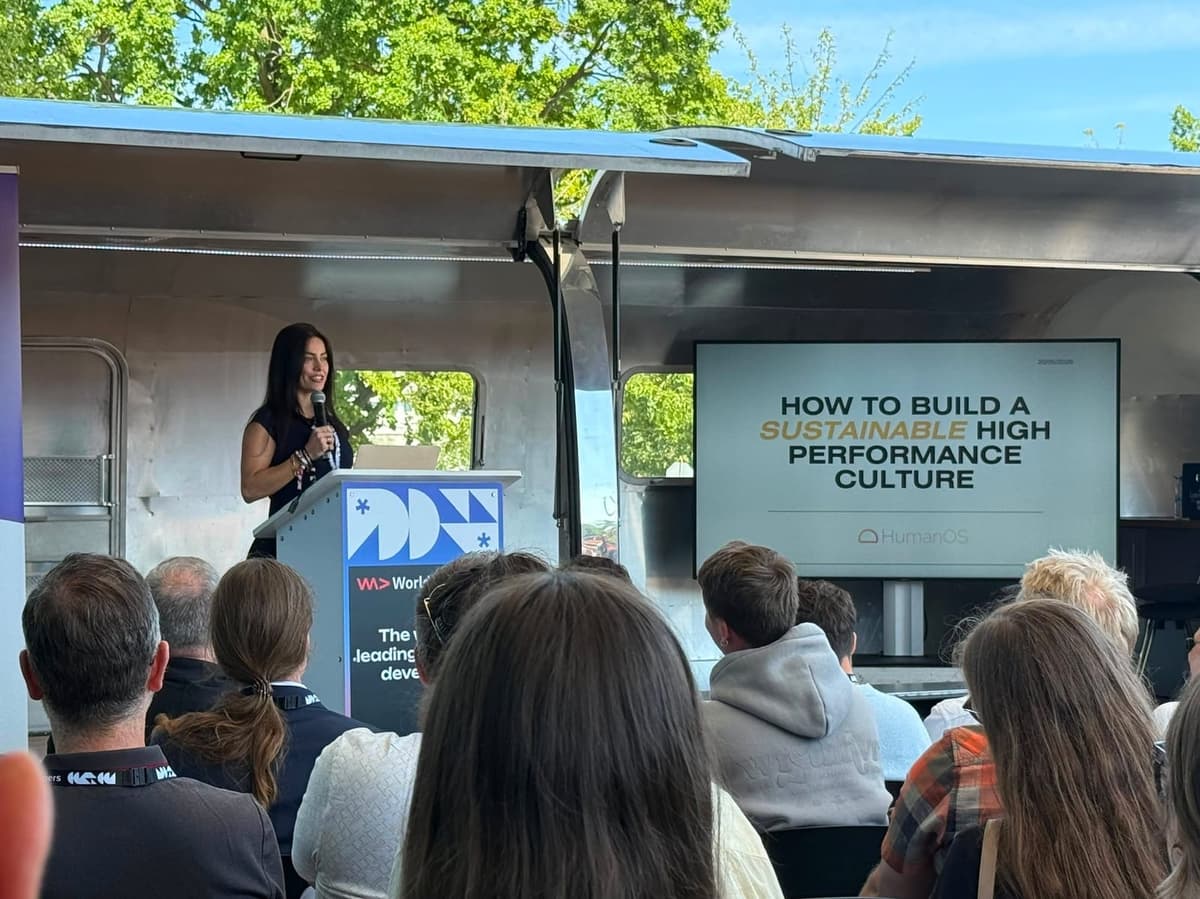
She knows the territory. Bianca has logged nearly 13,000 hours of coaching, a story that starts with her own grief and burnout, and HumanOS runs as a remote team itself. Our founder Gina met her speaking at We Are Developers Berlin, and they kept circling the same question: why do some teams come back from time away changed, while others slide straight back?
So we asked Bianca. Keep reading.
The Story Behind HumanOS
You have shared openly that your own burnout came before HumanOS did. What did that period teach you that 13,000+ hours of coaching later still holds true?
Out of nowhere, I found out my dad didn't have long left to live, the same month I was graduating university. I took a high-pressure corporate sales job straight after, one of the youngest on the team, one of the only women, and I chased the version of success I'd been taught to chase: targets, titles, performance. I was on a mission for my Dad and nothing else mattered. On paper, I was accomplishing my goals. Behind the scenes, I was becoming increasingly unwell.
When he passed, I ended up in hospital. My stomach stopped working. I couldn't sleep lying down. I was diagnosed with fibromyalgia, anxiety and depression. I was told I needed lifelong medication for my stomach issues and annual endoscopies. I am beyond grateful to say none of the above is any longer true.
What that period taught me, and what still holds truer than ever: you cannot outwork your physiological needs. Sleep, food, rest, connection, self-awareness… self-compassion!! These aren't privileges you get once things calm down, because things don't calm down. We are not superhuman, no matter what our job title or LinkedIn headline says.
The truth is almost nobody says "I'm struggling". The language is always about performance and KPIs, because that's the only currency the culture and the society around them accepts.
Why Time Away Works
An offsite can be two very different things: a temporary escape from an unhealthy way of working, or a lever for lasting change. What separates the teams that come back changed from the teams that slide straight back?
The teams that slide straight back are often the ones that treated the offsite as a reward for surviving the last six months, rather than an opportunity to redesign the next six.
Because the offsite itself will create momentum. There's actually research behind this. Landmark moments, whether it's a new year, birthday or retreat, create what researchers call the "fresh-start effect": a temporary increase in motivation and willingness to change.
But that motivation has a shelf life.
What separates the teams that come back changed is what they do with that window. They leave with specific commitments about what is going to be different, who owns it and when it starts. Not "we need to communicate better", but "our leadership team will meet every Monday at 9am and these are the three things we will cover."
That specificity matters. Research into implementation intentions shows that people are far more likely to follow through when they decide in advance exactly when, where and how a behaviour will happen.
And then leadership has to reinforce it. Culture isn't really what's written in your handbook. It's the behaviours people see repeated and rewarded every day.
So for me, the best offsites aren't an escape from how a team normally operates. They're a chance to decide how you want to operate when you get back.
Culture isn't really what's written in your handbook. It's the behaviours people see repeated and rewarded every day.
What actually happens in our thinking and our nervous system when we swap the office or the home desk for a completely different environment?
Your body doesn't know the difference between a genuine threat to your life and forty-seven unread Slack messages. It reacts the same way to both: cortisol goes up, the HPA axis switches on, you move into fight or flight. The problem is your desk, your inbox, your usual four walls become the trigger. Your nervous system has learned to associate that specific environment with being switched on, so even walking into the office on a good day, part of you braces.
We sit on a spectrum between sympathetic (fight or flight) and parasympathetic (rest and digest), and most overstretched people are stuck firmly in the first one, all day, every day. This is most people. Take away the environment that's been quietly triggering that state for months or years and you interrupt the loop.
A new environment gives the nervous system permission to actually downshift. And that matters, because you cannot access your best strategic thinking, your creativity or your patience from a nervous system that's still bracing for the next fire.
Your body doesn't know the difference between a genuine threat to your life and forty-seven unread Slack messages.
Recovery is a core theme in your work. How should leaders build real recovery into an offsite instead of filling every hour with sessions, and how do they protect that recovered state once the team returns home?
Recovery is the one almost nobody does properly, because most people don't actually know what it is. Collapsing on the sofa scrolling your phone at 9pm is not recovery, it's numbing. Recovery is deliberate: something that actually refills you rather than switches your brain off for an hour. For some people that's training, for others it's a proper conversation, a walk, cooking. It has to be chosen on purpose, not defaulted into.
The instinct with offsites is to fill every hour to justify the spend and prove it wasn't just a jolly but this is a mistake. Build in real unstructured time, on the agenda, not simply a gap between sessions. Be mindful however, if people are still checking their emails during the "free" hour, it was never free.
Protecting it afterwards isn't about recreating the retreat at home, that's impossible and sets everyone up to fail. It's picking two or three non-negotiables that came out of the trip, a sleep floor, a movement minimum, one conversation a week that isn't about work, and attaching them to something that already exists in the calendar.
As a society, we still get this wrong. We think change has to be dramatic to count when it rarely is. It's usually smaller than that: removing one thing that's been quietly draining you, or adding one habit small enough to actually keep. That's where the real growth happens, not in the big gesture, but in the boring, repeated choice most people are too impatient to make.
Recovery is deliberate: something that actually refills you rather than switches your brain off for an hour. For some people that's training, for others it's a proper conversation, a walk, cooking.
You recently joined a founder offsite. What did you see happen in that room that never happens on a video call?
When someone's physically relaxed, their guard drops with it, and that's when the real conversation happens. The best conversations we had were in the sauna, on a trail walk round the lake, over dinner when everyone's defences were down. These were conversations nobody had planned because nobody was performing. And these are usually the conversations businesses and the individuals within them need to be having. Put two people somewhere their body has already relaxed and the conversation changes entirely. The nervous system doesn't separate physical ease from emotional honesty, one follows the other.
When someone's physically relaxed, their guard drops with it, and that's when the real conversation happens.
Psychological Safety by Design
Psychological safety at work is easy to endorse and hard to build. Why does a shared trip accelerate it in a way that months of meetings often do not?
The upside is well evidenced. Teams with high psychological safety are meaningfully more engaged, more productive, and far less likely to leave. The disconnect is that almost nobody is actually getting it. McKinsey's own research found that only 43% of employees report their team has a positive climate, the single biggest driver of psychological safety. That means well over half are operating without it every day.
That's the real gap I see in organisations. Everyone can quote the psychological safety stat back to me. Almost nobody has actually built it, because it isn't built through good intentions or an away day, it's built through specific, repeatable leader behaviours: reducing the power gaps in the room, setting explicit shared norms instead of assuming everyone already has them, addressing problematic behaviour quickly rather than letting it slide, listening properly and giving people real space to feel like they belong, that they are seen, heard and valued and that they are safe to fail.
Where a shared trip genuinely helps is that it compresses all of this into a few days. Hierarchy naturally flattens when nobody's behind a desk. Shared norms get set faster because you're all navigating something unfamiliar together. And when someone's willing to look ridiculous in an activity in front of the whole team, they become more human.
Almost nobody has actually built it, because it isn't built through good intentions or an away day, it's built through specific, repeatable leader behaviours: reducing the power gaps in the room, setting explicit shared norms instead of assuming everyone already has them, addressing problematic behaviour quickly rather than letting it slide, listening properly and giving people real space to feel like they belong, that they are seen, heard and valued and that they are safe to fail.
If a founder is designing their next offsite around psychological safety and genuine connection, what are two or three concrete choices they should make, and what is the common mistake that quietly kills openness?
Two things actually move the needle. First, remove the visible markers of hierarchy for the length of the trip, no top table, no separate transport, no leader arriving late and leaving first, because psychological safety is contextual, someone can feel completely safe in one setting and shut down the second the hierarchy reappears. Second, the leader has to go first, and not with a polished, pre-approved version of vulnerability, with something actually true, because nobody in that room is going to be more honest than the most senior person in it.
The mistake that subtly kills it is over-programming the trip until it becomes a conference with a nicer view: every hour scheduled, every session with an outcome, no room left for the unscripted conversation that's usually where the actual shift happens. And the subtler version of that same mistake is leadership staying composed and on brand the entire time. If the people at the top never once look human, everyone else quietly concludes it still isn't safe to be.
The mistake that subtly kills it is over-programming the trip until it becomes a conference with a nicer view: every hour scheduled, every session with an outcome, no room left for the unscripted conversation that's usually where the actual shift happens.
Making It Stick: After the Offsite
Let's get practical: what needs to happen in the first two weeks after an offsite so the benefits carry into everyday working life?
The first two weeks are the highest-risk window, we come home and let the calendar fill straight away and return back to our old routines. Within 48 hours, we need to capture what was actually agreed, and be strict about the language, not intentions, specific plans, because "we'll communicate better" evaporates by Wednesday and "we open every Monday with one honest blocker" survives, precisely because it's tied to something that's already in the diary.
Book one follow up check in for the middle of that two week window before anyone's even left the offsite, not after everyone's back and buried. And keep one small ritual from the trip alive exactly as it was, however you opened a session, a walk instead of a meeting room, something visible enough that people notice it didn't disappear the second you landed. If nothing survives the first fortnight unchanged, nobody believes anything's actually different.
HumanOS is built on habit science. Which habits formed during time away are most likely to survive contact with the calendar, and how do you protect them?
There's no single habit I can hand you here, because everything HumanOS is built on is about moving from one size fits all to one size fits one. Every part of our service, every employee on our platform, every organisation we work with, is personalised, and habits are no different.
What does hold universally is the mechanism. UCL's research on habit formation tracked people for 84 days and found automaticity plateaus at 66 days on average, but the range ran from 18 days to over 250, and the difference came down to how simple the behaviour was and how consistently it was cued.
So the habits that survive are whichever ones genuinely fit the person's real week, not the retreat's conditions. Protecting them means the same thing for everyone even though the habit differs: pair it to a cue that already exists, and pair the person with someone from the trip to hold them to it.
Pair it to a cue that already exists, and pair the person with someone from the trip to hold them to it.
How would you measure whether an offsite actually changed team culture, beyond the feel-good survey on the last day?
A survey on the last day is measuring people at the most endorphin-flooded moment of the whole process. Of course it comes back glowing. That tells you almost nothing about a random Tuesday six weeks later.
What actually shows culture change is behaviour, not sentiment. Are people still surfacing disagreement in meetings weeks afterwards, not just on the trip when it felt low stakes? Are people working across teams or with colleagues they wouldn't previously have engaged with? Have new working relationships actually carried back into the day-to-day? Has anything moved on sick days or presenteeism over the following quarter? Presenteeism, people physically there but mentally checked out, is one of the biggest hidden costs and one of the easiest to miss entirely. Has retention moved over the two quarters that follow? That's an outcome that is much easier to connect back to the business.
Measure at 30, 60 and 90 days, not day one. Culture change has a lag, and if you only ever ask people how they feel on the last afternoon of the trip, you'll always get the answer the trip wants you to hear.
Measure at 30, 60 and 90 days, not day one.
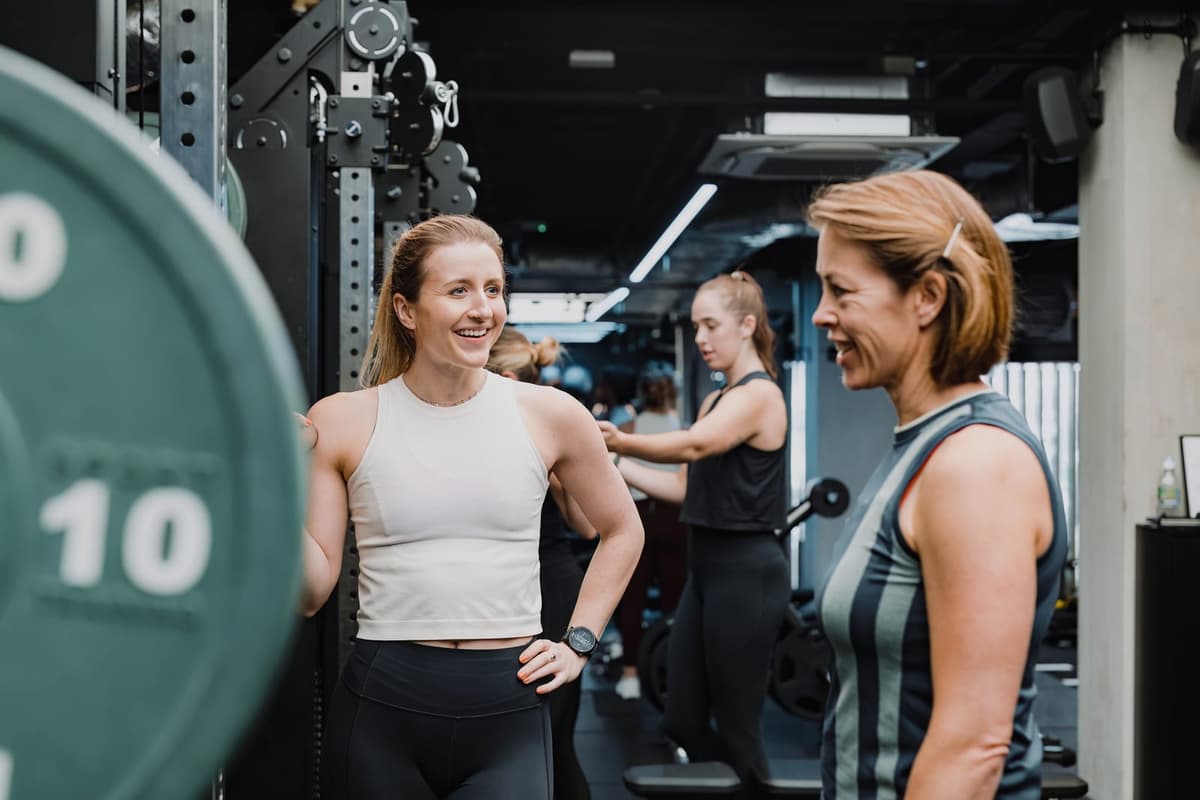
Remote at HumanOS
HumanOS runs as a remote team itself, and your platform data shows weekly user engagement is 15.6x the industry standard. How do you use your own time together, and what keeps a distributed team engaged between the moments you meet in person?
If you're running a remote team and wondering where to start, it comes down to three things psychology has understood for decades: autonomy, mastery and connection. People stay engaged when they have real choice in how they work, when they can feel themselves getting better at something that matters to them, and when they're doing it with people they actually care about. This has nothing to do with being fully remote or in the office five days a week.
At HumanOS we use our in-person time for the moments that actually build trust and real human experience. Twice a year we do a full team day, it may be breathwork with one of our own breathwork coaches, a creative art therapy session with one of our therapists, finishing with pizza because that's become our own tradition. But it is about doing something that brings people together and allows us to really connect.
Between those days, we hold weekly optional coffee calls, properly optional, roughly 90% of that time has nothing to do with work, it's just bonding, hearing what's actually going on for someone. The other 10% covers anything urgent.
Our 1:1s get built around the person matching their energy and their genuine needs, not just KPIs.
Being remote doesn't have to mean being disengaged. It means learning how someone communicates, how they like to be managed, how involved they want to be, and building around that person specifically, not a policy that applies to everyone the same way.
People stay engaged when they have real choice in how they work, when they can feel themselves getting better at something that matters to them, and when they're doing it with people they actually care about. This has nothing to do with being fully remote or in the office five days a week.
Sustainable High Performance
You work with organisations from fast-growing scale-ups to household names. Where does burnout prevention rank on leadership agendas right now, and where should it rank?
To be totally honest most of the time it's still filed under "nice to have". An EAP nobody uses in the corner, a wellbeing budget that's the first line cut when things get tight, a mental health week once a year. Companies say their people are their greatest asset and then hand them a helpline and a fruit bowl.
Where it should rank: as a line on the P&L, not a line in the HR handbook. Deloitte puts the cost of poor mental health to UK employers at £51 billion a year, and presenteeism, not absenteeism, is the biggest single driver of that, £24 billion versus £7 billion, because someone sat at their desk switched off costs you more than someone honest enough to stay home. McKinsey and the World Economic Forum found investing properly in employee health could unlock up to $11.7 trillion in global economic value. And globally, only 20% of employees are actually engaged at work according to Gallup's most recent data, which means more than three quarters of the workforce most businesses are paying full price for isn't showing up as anything close to full value.
The organisations getting this right aren't simply doing it because it's kind. They're doing it because it's the biggest unexploited line item most businesses have.
Deloitte puts the cost of poor mental health to UK employers at £51 billion a year, and presenteeism, not absenteeism, is the biggest single driver of that, £24 billion versus £7 billion, because someone sat at their desk switched off costs you more than someone honest enough to stay home.
One Last Question
What do you see coming for the future of work that most leaders have not clocked yet?
Of course we can't get through any piece of work without AI being mentioned, so here we go 🙂 If you ask me what's coming next, it's what happens once AI properly lands in every workplace, and many leaders are still having the wrong conversation about it.
Right now it's mostly about tools, adoption, efficiency. 63% of C-suite leaders now say the highest people-related ROI comes from redesigning work around human and AI working together, not from chasing the latest model. The advantage isn't going to the fastest adopters, it's going to whoever gets the human side of that redesign right.
The WEF's Future of Jobs data backs this from a different angle. By 2030, 39% of core skills will have changed, and AI is projected to displace 92 million roles while creating 170 million new ones. Most leaders fixate on the displacement number and miss what's actually rising in value: the top skills WEF ranks for 2030 aren't technical at all, they're resilience, adaptability, leadership and social influence, creative thinking. As AI absorbs more of the technical execution, judgement, coaching, trust and human leadership stop being the soft add-on and become the actual differentiator.
Treating sustainable performance, psychological safety and real human development as nice to have culture initiatives sitting next to the AI strategy is a mistake. In three years, they'll be the AI strategy, because the only thing left for a business to compete on once everyone has the same tools is how well it develops and leads its people.
63% of C-suite leaders now say the highest people-related ROI comes from redesigning work around human and AI working together, not from chasing the latest model.
More from Bianca and HumanOS
Want to build sustainable high performance into your organisation? Explore HumanOS to see how personalised coaching, expert support and behavioural insights can help your people perform, develop and thrive.
To book Bianca for a keynote, workshop or leadership session on sustainable high performance, workplace culture, emotional intelligence or burnout prevention, connect with her on LinkedIn or visit HumanOS.
The Workplace Wellbeing Deficit: The Crisis, the Cause, the Cure is HumanOS and Howlett Brown's 2025 report exploring the state of workplace wellbeing in the UK through an intersectional lens, with practical recommendations for leaders, HR teams, managers, employees and EAP providers.
Design the outcome, reverse engineer from there
Bianca's answers keep landing on the same order of operations: decide what has to be different when everyone is back, then design the days that get you there. Real recovery on the agenda, hierarchy left at home, and commitments specific enough to survive the first fortnight. Working backwards from that outcome is the part we handle.
Ready to plan one for your team? Let's connect and catch the wave.

Brought to you by